Is Gorilla Trekking Worth Its Costs
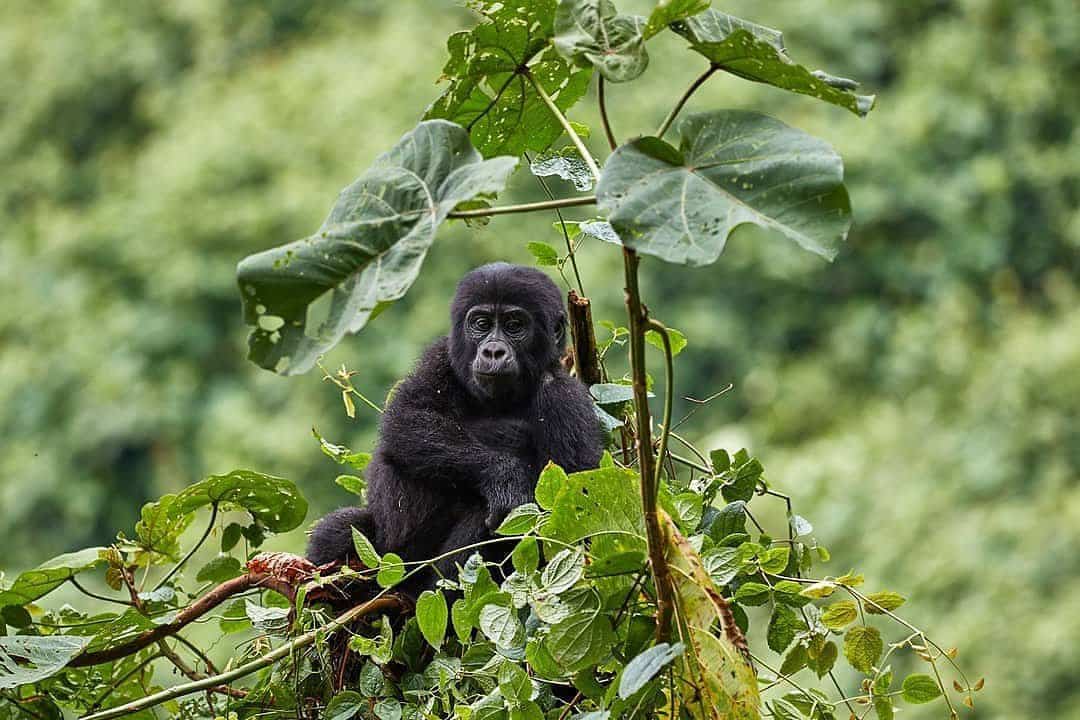
Is Gorilla Trekking Worth Its Costs? I must say, Gorilla trekking is one of the most expensive tourism activities in both Uganda and Rwanda, which shouldn’t be missed on an African safari because it’s an exceptional experience. Mountain gorillas are extremely rare, as they can only be found in three African countries worldwide: Uganda, Rwanda, and the Democratic Republic of the Congo.
According to the recent mountain gorilla population census, there are 1,063 mountain gorillas left in the world, and their population is increasing at a rate of 3.7% per year. They only survive in their natural habitats, which are mountainous areas of Bwindi Impenetrable National Park, Mgahinga National Park, Volcanoes National Park and Virunga National Park in DR Congo.
Mountain gorillas live in the mountainous regions of East and Central Africa, which were highly affected by underground forces resulting in Mountains, valleys, lava-dammed lakes, waterfalls and many other geological features.
Therefore, our visitors are the ones who are supposed to visit these areas where mountain gorillas are found to track them, since they only survive in mountainous regions of central and eastern Africa. Our visitors should be physically fit and in good health to track the mountain gorillas, as it requires a significant amount of energy, time and patience.
Visitors should also expect discomfort during the trek as they hike through the forest, encountering thorny bushes, insects, and muddy and slippery trails. However, the moment you set your eyes on a gorilla family, you will stop regretting it.
Cost of Gorilla Trekking Permit
Gorilla permits are cards issued by Uganda Wildlife Authority and Rwanda Development Board to allow visitors to go for either gorilla trekking or gorilla habituation, depending on the visitors’ choice.
They are issued after the payment is made; therefore, our clients are requested to book with us in advance so that we secure gorilla permits for them.
This is due to the high competition for gorilla permits from other tour companies and the limited number of trackers by the Uganda Wildlife Authority. Visitors can opt for either gorilla trekking or gorilla habituation, depending on their choice.
Uganda’s Gorilla Trekking Permit
The current cost for gorilla trekking in Uganda is $800 for non-residents and $700 for Foreign Residents. As of July, a gorilla trekking permit will cost $800 for foreign residents and $700 for foreign non-residents, and $500 for residents of the Rest of Africa.
The gorilla habituation permit costs $1500, and its price has not increased.
Rwanda’s Gorilla Tracking Permit
In Rwanda, a gorilla permit costs $1500. The time to spend with the mountain gorillas is 1 Hour. Visitors who come to Uganda and Rwanda have the choice between gorilla trekking and gorilla habituation.
The duration for gorilla trekking is one hour from the time you set your eyes on the mountain gorilla family and four hours with the gorilla habituation.
Gorilla Trekking Africa
The one-hour encounter with the mountain gorillas allows for the observation of their social behaviours such as grooming, playing, picking insects from their bodies, and mating. Trackers are free to take photos, capture videos and ask the guides questions.
During the trek, you will also come across other wildlife like birds, wild animals, and a variety of plant species.
Gorilla Habituation Experience.
Gorilla habituation gives our visitors a chance to spend 4 hours with the mountain gorillas from the time you set your eyes on a gorilla family.
The activity is only done in the Rushaga sector in Bwindi Impenetrable National Park and Volcanoes National Park in Rwanda.
Visitors accompany researchers, scientists, and rangers on visits to the mountain gorillas, and visitors are free to ask all the questions they want, take photos and even record videos.
Visitors participate in the process of acclimatising mountain gorillas to get used to human presence as they observe semi-habituated gorillas.
Why is Gorilla Trekking Worth Its Costs
The mountain gorillas are so amazing to see when they are close to you. They exhibit human-like characteristics such as grooming each other, feeding their young, and playing with them. The silverbacks play a role in protecting their families.
Some tourists have visited Africa more than once to track mountain gorillas, as they are truly amazing to see. They do have human-like characters, and their social interactions are enjoyable to see. In fact, some track both in Uganda and Rwanda.
The silverback gorilla is truly remarkable to observe due to its uniqueness. It has a silver stripe on its back as it develops into adulthood. Silverbacks are also big in size compared to other members of the family.
The guides, trackers, and rangers possess extensive experience and knowledge about the mountain gorillas; therefore, our visitors are encouraged to ask any questions they may have.
Mountain gorilla trekking is an activity which benefits the local communities around the mountain gorilla habitat. For example, porters who assist visitors during mountain gorilla treks are paid a fee, which serves as a source of income to them, hence improving their standards of living.
Twenty per cent of revenue collected by the national park is returned to the communities around the park. It is used to set up projects that can generate income for local people around national parks and also provide social services to the community, such as free education, medical services and many others.
There has been an increase in the number of visitors coming to both Uganda and Rwanda to track mountain gorillas, as these gentle creatures are fascinating to observe as they go about their daily activities.
Part of the gorilla permit fee is also used to fund conservation projects, such as sensitising the local communities to realise the importance of the national park to them.
The revenue is also used to protect the Batwa (original people) of the ancient Bwindi Impenetrable Forest.
In conclusion, gorilla trekking is a must-include best wildlife experience that shouldn’t be missed on an African safari, as it is worth the effort, even though the fee is a bit steep.